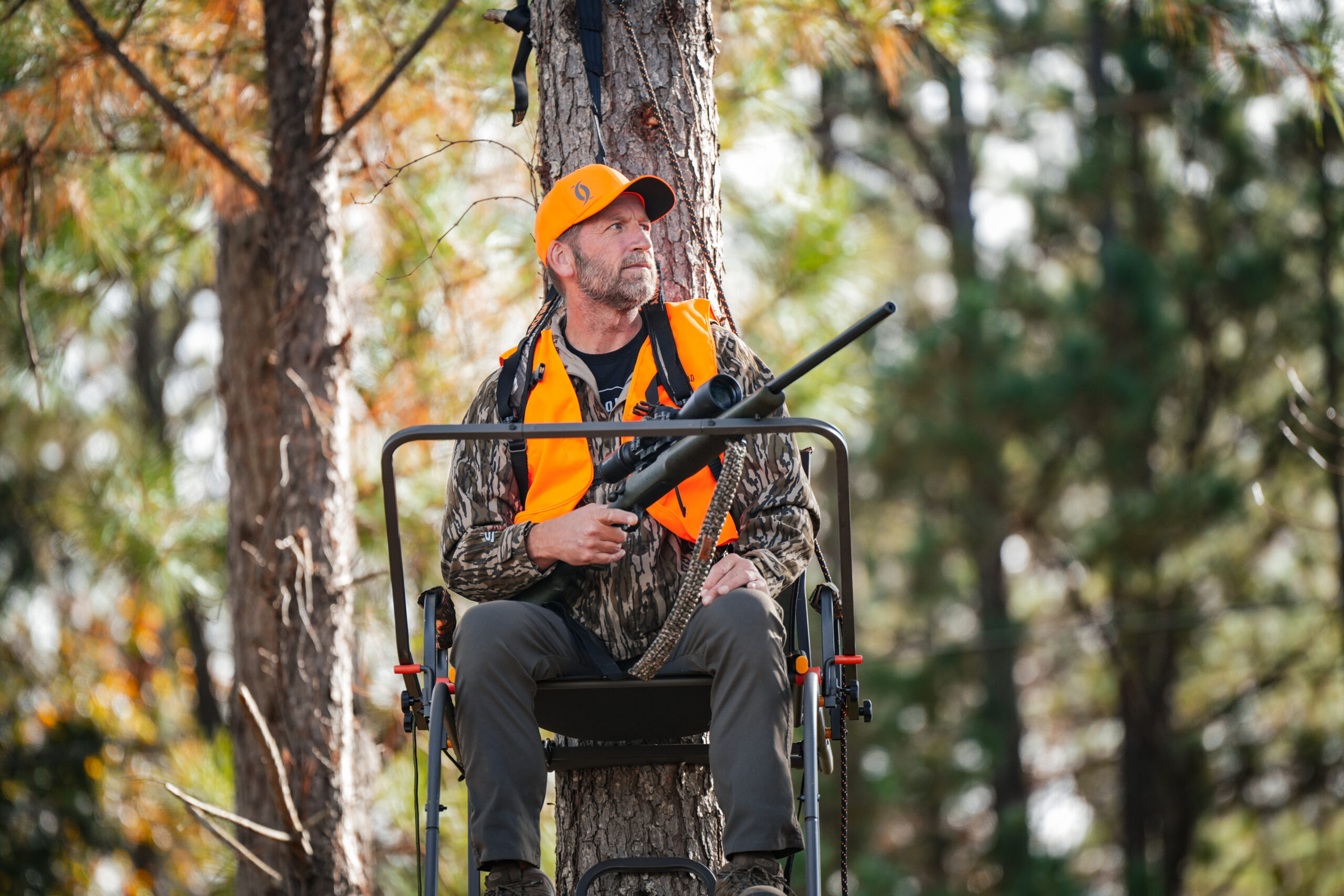
A treestand puts you above a deer’s line of sight and scent, which is why so many hunters use them. It also puts you 15 feet or more off the ground, and falls from elevated stands are a leading cause of serious hunting injuries. The good news is that nearly every fall is preventable with the right gear and a few habits you repeat every time you climb. Run through the safety check below before your next hunt, and find out whether you are ready to climb or have something to fix first.
How to use this safety check
- Pick your stand type. Ladder stands, hang-on stands with climbing sticks, and climbing stands each add one check of their own.
- Check off each item as you confirm it. Items marked Must do are the ones that keep you alive.
- Watch the result box. It turns green and says Safe to climb only when every must-do item is checked. Until then, it lists what to fix first.
Treestand Safety Check
0 of 0 checkedWhat kind of stand are you using?
Before you leave home
Gear check
At the tree
Climbing up
In the stand
Getting down
Always follow the instructions for your own stand and harness. Nothing you check here is saved or sent anywhere.
Why treestand safety matters
Hunter education has done a lot to cut firearm accidents, and today falls from treestands rank as a top cause of serious hunting injuries. Most of those falls do not happen while the hunter is sitting in the stand. They happen while climbing up, climbing down, or stepping between the ladder or steps and the platform. That is why the single most important rule is simple: stay connected to the tree from the moment your feet leave the ground until they are back on it.
The fall-arrest system, explained
A fall-arrest system is more than a harness. It is three or four pieces that work together:
- Full-body harness: straps around your chest, shoulders, and legs that spread the force of a fall and keep you upright. Old waist belts and single chest straps are not safe.
- Tether: the short strap from the back of your harness to the tree. Attach it above your head and keep the slack short, so if you slip you stay at the level of your stand.
- Tree strap: the strap around the tree that your tether clips to while you are in the stand.
- Lifeline: a rope that runs from the base of the tree up to the stand, with a sliding prusik knot you attach to. It keeps you connected while you climb, which is when most falls happen.
- Suspension relief strap: a strap on your harness that you can step into if you fall and end up hanging.
Use a harness and stand that meet Treestand Manufacturers Association (TMA) standards, follow the manufacturer’s instructions, and replace any harness that has caught a fall.
Climbing in and out safely
- Clip on to your lifeline, or put on your lineman’s belt, before your feet leave the ground.
- Keep three points of contact on every step: two hands and one foot, or two feet and one hand.
- Climb slightly above the platform and step down onto it, rather than pulling yourself up and over it.
- Attach your tether to the tree strap before you unclip from the lifeline. Reverse the order when you leave.
- Climb with empty hands. Everything else comes up on the haul line.
Getting your firearm or bow into the stand
Never climb with a firearm or bow. Once you are in the stand and clipped in, use a haul line to pull it up. Firearms should be unloaded with the action open, muzzle pointed down, and the line tied away from the trigger and trigger guard. Bows should have arrows in a covered quiver. Lower everything the same way before you climb down. Our opening day checklist covers the rest of the gear you will want in the stand.
Inspect before every hunt
Stands that stay up for weeks take a beating from weather and animals. Before you climb, check straps for fraying and chewing, look for rust or cracks on the platform and bolts, and make sure the stand and steps are tight against the tree. Inspect your harness and tether too. If anything looks worn or damaged, do not use it until it is replaced. And choose a healthy, living, straight tree. A dead or leaning tree can fail even when the stand does not.
If you fall
A harness turns a deadly fall into a survivable one, but hanging in a harness is an emergency of its own. Hanging still in a harness can restrict blood flow from the legs, and it can lead to unconsciousness within minutes. This is called suspension trauma. If you fall:
- Stay calm and try to get back onto your stand or steps right away.
- Call or signal for help. Keep your phone or whistle on your body, where you can reach it while hanging.
- Step into your suspension relief strap to take pressure off your legs.
- If you cannot relieve the pressure, keep your legs moving by pushing against the tree until help arrives.
Practice this at ground level with a partner before the season, so you know how your harness feels and how your relief strap works.
Keep reading: Deer hunting for beginners guide
Questions new hunters ask about treestand safety
Do I really need a harness in a ladder stand?
Yes. A ladder stand feels more stable, but you can still slip on the rungs or lose your balance at the top. Wear a full-body harness and stay connected in every type of elevated stand.
When should I put my harness on?
Before you leave the truck or camp, so it is on and adjusted before you reach the tree. Connect to the lifeline or tree before your feet leave the ground.
How high should I hang my stand?
Only as high as you need to be. Higher stands make the fall more dangerous and the shot angle steeper, which shrinks the target. Our shot placement guide covers shooting from a treestand.
Can I leave my stand up all season?
You can, but inspect it carefully every time you climb. Straps weaken in the weather and animals chew on them. Many hunters take stands down after the season.
Is treestand safety covered in hunter education?
Yes. Hunter education covers elevated stands, fall-arrest systems, haul lines, and what to do if you fall, along with firearm safety and hunting laws. Want to see how much you already know? Try our hunter education practice test.
Get the foundation first
The habits that keep you safe in a treestand are the same ones hunter education builds from the start: plan ahead, check your gear, and never take shortcuts with safety. If you have not taken hunter education yet, get your hunter education certification online, at your own pace, with a certificate accepted in every state that requires hunter education.